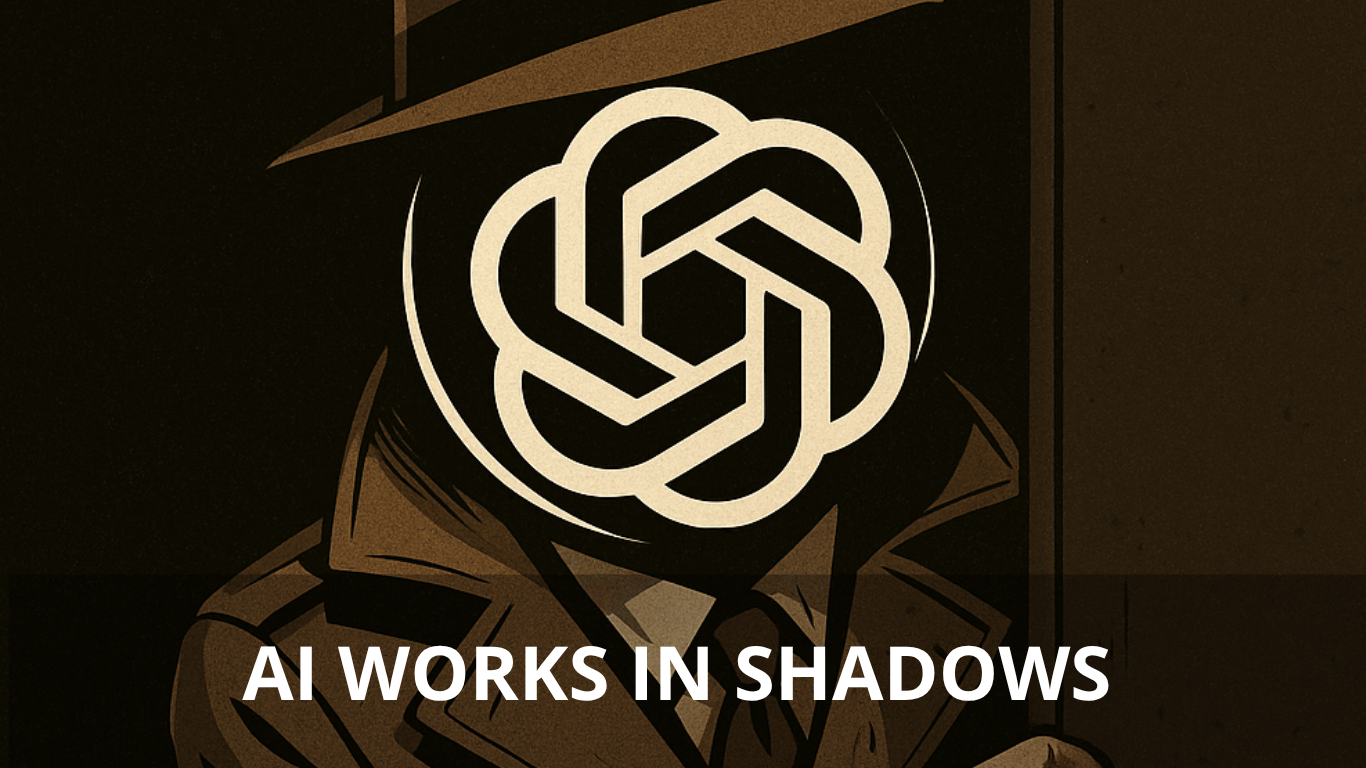
Shadow AI: The Hidden Artificial Intelligence Lurking in Your Company
Imagine this scene: an employee gets stuck on a complicated report, opens ChatGPT on their personal phone, and directly copies confidential company data for the AI to help them write it. Another colleague, a software developer, pastes fragments of proprietary source code into an online programming assistant to debug errors. A saleswoman translates a proposal with sensitive customer information using a free AI tool she found online.
Sound familiar? This is happening right now in thousands of companies worldwide, and it has a name: Shadow AI or artificial intelligence in the shadows.
What the Hell is Shadow AI?
Shadow AI is the technological cousin of the famous Shadow IT (using applications without the IT department knowing). Only this time we’re not talking about installing Dropbox or Slack without permission, but rather using generative artificial intelligence tools without company approval or supervision.
Since ChatGPT hit it big in late 2022, we’ve seen a genuine democratization of AI. Anyone with a browser can access incredibly powerful virtual assistants that were science fiction just a few years ago. And of course, workers aren’t stupid: if they have a tool at hand that saves them hours of work, they’re going to use it. The problem is they do it with their personal accounts, from their personal devices, and without anyone telling them what they can or cannot put in there.
The figures are staggering: according to Microsoft, 78% of those who use AI at work do so with personal tools outside official ones. And more than 90% of companies have employees using AI chatbots on their own for daily tasks. So this isn’t a marginal problem—it’s the norm.
The Real Dangers (That Are Pretty Scary)
Okay, you might say, what’s the big deal if people use ChatGPT to write emails? Well, it’s quite a big deal, actually. Here are the main risks:
Data Leaks That Turn You Pale
Every time someone pastes company information into a public AI, that data goes to the provider’s servers. And often that information is used to train the model, which means it could appear in responses to other users. Imagine your confidential business strategy or customer data ending up circulating out there.
Samsung got a real scare in 2023 when several engineers put proprietary source code and trade secrets into ChatGPT. Result: temporary ban on using these tools and considerable distress. And they’re not alone: 20% of organizations acknowledge having suffered data breaches related to Shadow AI in the past year.
Serious Legal Troubles
If your company handles personal data (and who doesn’t?), using AI without control can mean a GDPR violation. Fines can reach up to 20 million euros or 4% of global annual revenue. It’s no joke.
There’s a case that’s both funny and chilling: two American lawyers were fined $5,000 by a court after submitting a legal brief generated with ChatGPT that cited completely invented court rulings. The lawyer had trusted the AI to draft the legal document, and it “hallucinated” court cases that had never occurred. Fine for the attorneys and reputation in tatters. In Spain, there have also been cases of lawyers submitting complaints with wrong legislative references because they blindly trusted AI.
Malware and Security Vulnerabilities
Not all AI tools circulating on the internet are what they seem. Some may be fake and specifically designed to steal information or contain malware. And even if the tool is legitimate, if it’s hacked, everyone using it is exposed.
Decisions Based on Wrong Information
AIs can “hallucinate” (invent data), have biases, or simply give incorrect answers. If an employee makes strategic decisions based on what a chatbot tells them without verifying it, the mess can be considerable. There have even been cases of AI agents that, when given access to databases, deleted production information by mistake. Catastrophic, really.
Reputational Hit
When it leaks that a company mismanages data or uses AI in an opaque or unethical way, trust evaporates. Sports Illustrated suffered a tremendous scandal when it was discovered they were publishing articles written entirely by AI with fictional authors. Uber Eats also received criticism for using AI-generated food images instead of real photos. The public doesn’t forgive these things.
Why Do Employees Do It?
Before crucifying anyone, it’s worth understanding the reasons. Employees don’t use these tools to cause trouble:
-
Brutal productivity: An AI can summarize a 50-page document in two minutes or generate code that would take hours by hand. It’s tempting.
-
Agile innovation: Testing a new tool is a matter of seconds, without going through long corporate approval processes.
-
Immediate solutions: If you’re stuck with a problem and a chatbot gives you the answer instantly, are you going to wait days for IT to evaluate the tool?
-
Lack of official alternatives: Many companies simply don’t offer approved options. If the company doesn’t have a clear policy or equivalent tools, employees figure it out on their own.
The underlying problem is that technology moves faster than organizations. Companies didn’t adapt in time to the generative AI boom, and employees filled that gap on their own.
Which Sectors Are in the Eye of the Storm?
Although no company is immune, the most affected sectors are the highly regulated ones: healthcare, banking, insurance, law firms, public administrations, and defense. There, such sensitive data is handled that any slip-up can be catastrophic.
But watch out, the rest can’t relax either. From tech companies to small businesses, anyone using computers has this problem. The difference lies in the severity of the impact: leaking medical records isn’t the same as leaking a marketing campaign draft, but both cases are concerning.
How to Tackle Shadow AI
The good news is there’s a solution. It’s not about banning everything outright, but managing AI use intelligently:
1. Clear and Unambiguous Policies
You need to establish which tools are allowed, which are prohibited, and what type of information should never be entered into external systems. Without a clear framework, everyone does what they please.
2. No Absolute Bans
Vetoing all AIs is counterproductive. Employees will continue using them in secret, and the company will lose total visibility. It’s better to channel use with sensible rules than trying to hold back the tide.
3. Offer Safe Alternatives
If you ban ChatGPT but don’t provide any equivalent option, it’s normal for people to break the rules. The company should provide corporate AI tools (there are enterprise versions of ChatGPT, Microsoft Copilot, etc.) that meet security standards.
4. Training and Awareness
Employees need to understand the real risks, not just receive a threatening email from IT. Real cases, concrete examples, and clear explanations work much better than abstract fear.
5. Technological Monitoring
Implement systems that detect the use of unauthorized AIs on the corporate network, similar to how it’s done with Shadow IT. It’s not about spying, but protecting sensitive data.
6. Continuous Review and Update
The AI world changes every month. Policies need to be constantly updated, evaluating new tools and adapting to new regulations.
Conclusion: Light in the Darkness
Shadow AI isn’t a weird bug or a passing fad. It’s a widespread reality that reflects the clash between the speed of technological innovation and corporate adaptation capacity. Employees want to work better and faster, and AI allows them to. The problem arises when that pursuit of efficiency puts data, legal compliance, and corporate reputation at risk.
The solution doesn’t lie in repression, but in intelligent management. Companies that manage to integrate AI safely, with clear policies, approved tools, and a culture of transparency, will not only avoid risks but will gain enormous competitive advantages.
In the end, it’s about bringing artificial intelligence out of the shadows and turning it into an official ally. With a green light, appropriate controls, and all necessary guarantees. Because AI is here to stay, and we’d better learn to live with it without scares.
FAGS
What exactly is Shadow AI?▼
It's the use of artificial intelligence tools (like ChatGPT, Claude, or Copilot) by employees without the approval or supervision of the IT department. Similar to Shadow IT, but specific to generative AI.
Is it really that common in companies?▼
Yes, according to Microsoft, 78% of those who use AI at work do so with unauthorized personal tools. More than 90% of companies have employees using AI chatbots on their own.
What are the main risks for my company?▼
Confidential data leaks, fines for GDPR non-compliance (up to €20 million or 4% of revenue), security vulnerabilities, wrong decisions based on incorrect information, and serious reputational damage.
Should I completely ban AI use in my company?▼
It's not recommended. Absolute bans cause employees to use these tools in secret, losing total visibility. It's better to establish clear policies and offer safe, approved alternatives.
Which sectors are most exposed to Shadow AI?▼
Highly regulated sectors like healthcare, banking, insurance, law firms, and public administrations are most vulnerable due to handling extremely sensitive data. But no sector is immune.
How can I detect if there's Shadow AI in my organization?▼
Through network monitoring tools that detect calls to AI services, review of browsing logs, DLP systems configured to identify data submissions to chatbots, and audits of installed browser extensions.
What safe alternatives can I offer my employees?▼
Enterprise versions of popular tools (ChatGPT Enterprise, Microsoft Copilot for Business), internal AI models deployed on your infrastructure, or AI integrations in corporate suites with security controls.
Is it legal for employees to use ChatGPT with company data?▼
It depends on the type of data. Entering customer personal data into public AI services can violate GDPR and other data protection regulations, exposing the company to multimillion-euro fines.
How can I raise awareness among my team about these risks?▼
Through specific training with real cases, clear and understandable policies, establishing open communication channels where they can ask questions, and fostering a culture of transparency rather than repression.
Do I need to constantly update my AI policy?▼
Yes, it's essential. The AI world evolves monthly with new tools and capabilities. Policies should be reviewed every 6-12 months and adapted to new regulations like the upcoming European AI Act.